

10 Reasons Your Global Supply Chain Isn’t Resilient Enough (And How to Fix It)
In the current global economic landscape, the word "disruption" has shifted from a rare occurrence to a daily operational reality. For executives steering multinational corporations, the complexity of managing a seamless flow of goods across borders has never been more daunting. While many organizations believe their supply chains are optimized for the modern age, recent events have exposed a harsh truth: efficiency does not equal resilience.
At MOHBILITY, we have meticulously analyzed the systemic vulnerabilities that leave even the most robust-looking operations exposed. Navigating international complexities requires more than just a logistical plan; it requires a comprehensive strategic transformation.
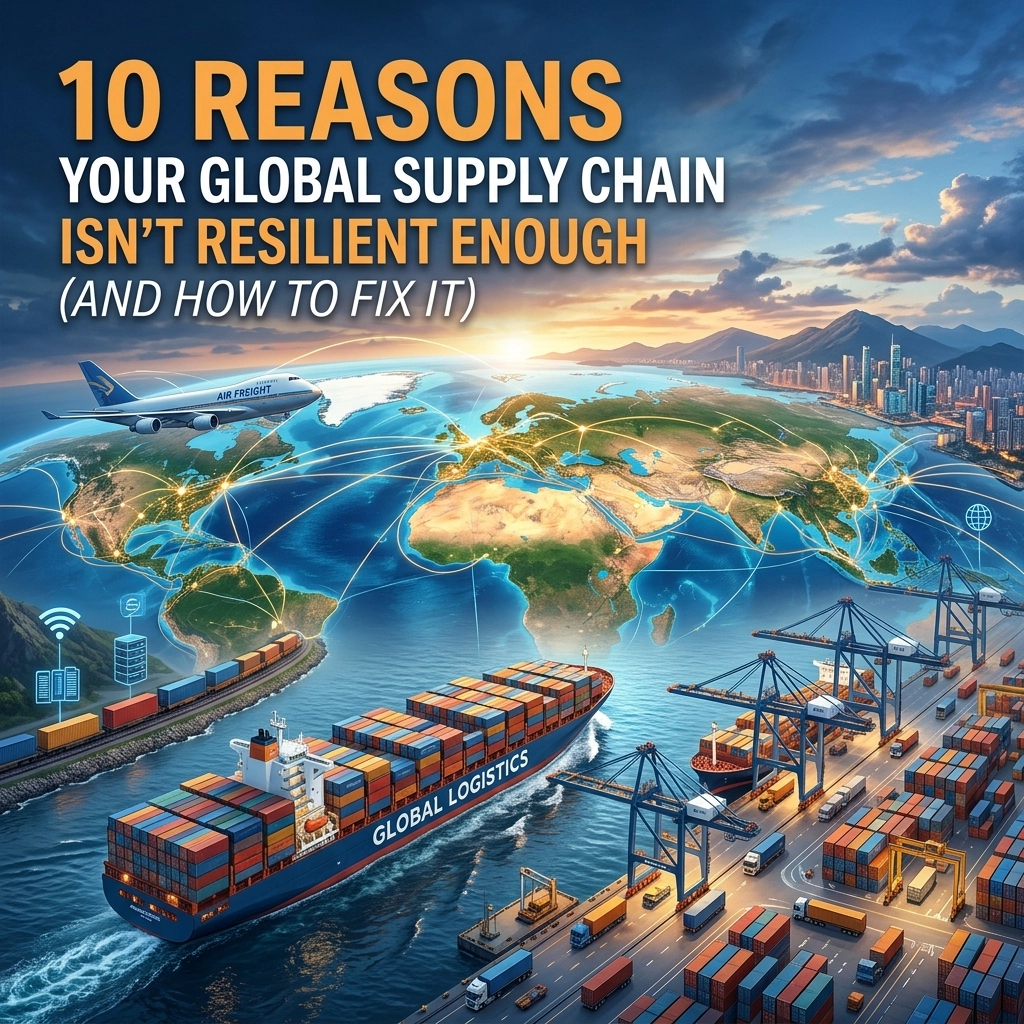
If your organization is struggling to maintain stability amidst trade volatility, here are the 10 reasons your global supply chain isn’t resilient enough: and how we can help you fix it.
1. Geopolitical Unrest and Trade Volatility
Geopolitical instability has emerged as the premier threat to global commerce. From the Red Sea crisis to shifting tariff policies and regional conflicts, the "predictable" trade routes of the past decade have vanished. If your strategy relies on the geopolitical status quo, you are operating on borrowed time.
The Fix: You must shift toward a strategy of regional sourcing and geographic diversification. By rerouting production closer to end consumers and diversifying your supplier base across multiple non-conflicting regions, you mitigate the risk of a single political event paralyzing your entire network. MOHBILITY specializes in commodity trade and investment facilitation, providing the expertise needed to navigate these high-stakes transitions.
2. Over-Reliance on Cost Optimization
For twenty years, "lean" was the gold standard. Businesses stripped away safety stocks and consolidated suppliers to the lowest bidder to maximize short-term margins. However, this extreme cost optimization has created brittle systems that lack the "buffer" necessary to survive a shock.
The Fix: Transition from a "Just-in-Time" model to a "Just-in-Case" mindset for critical components. Resilience requires balancing efficiency with strategic redundancy. This involves a meticulous reassessment of your inventory buffers and a willingness to invest in stability over the absolute lowest unit cost.

3. Insufficient Supply Base Diversification
Many enterprises suffer from a "concentration risk" they don't even fully realize. Having three suppliers is irrelevant if all three are located in the same industrial zone or rely on the same raw material source. This lack of true diversification creates a single point of failure.
The Fix: You need a comprehensive audit of your supplier geography. Develop multiple sourcing options across different continents. At MOHBILITY, we empower our clients through partnership identification, ensuring you are connected with diverse, high-quality international partners that provide a robust safety net.
4. Lack of End-to-End Visibility and Real-Time Data
You cannot manage what you cannot see. Many supply chains operate in silos, where data from vendors, freight forwarders, and secondary suppliers is delayed or obscured. This lack of transparency means you are often reacting to problems that occurred days or weeks ago.
The Fix: Implement centralized, real-time data systems that eliminate silos. Digital transformation is no longer optional; it is the backbone of resilience. By integrating business performance analysis, you can transform raw data into actionable insights, allowing you to predict disruptions before they manifest.

5. Manual Reporting and Informational Lag
In an era of high-frequency trading and instant communication, many procurement departments still rely on manual spreadsheets, emails, and even paper-based reporting. This creates a dangerous informational lag, especially across different time zones.
The Fix: Digitize your reporting protocols immediately. Automated data collection ensures that your leadership team has a "single version of the truth" at any given moment. MOHBILITY assists in back-office automation, streamlining these antiquated processes to ensure your information flows as fast as your goods.
6. Inability to Monitor Production in Real Time
When a crisis hits: be it a pandemic or a localized natural disaster: the ability to physically inspect a factory is often lost. Without remote monitoring capabilities, you are effectively flying blind, unable to verify production status or quality standards.
The Fix: Invest in remote monitoring technologies and digital quality management systems. This "digital twin" approach to your supply chain allows for oversight regardless of travel restrictions or local disruptions, providing you with the peace of mind that your standards are being met.
7. Talent Shortages and Skills Gaps
The modern supply chain requires a different set of skills than the supply chain of 2010. There is a massive gap in talent capable of handling data analytics, AI integration, and complex international trade law. A team using old methods cannot solve new problems.
The Fix: Invest in specialized training or partner with external experts who bring modern methodologies to the table. Our agile implementation consulting helps bridge this gap, embedding advanced strategic thinking directly into your operational DNA.

8. Antiquated Procurement Operations
Many procurement teams use only a fraction of the technology available to them. They are bogged down by administrative tasks and lack the tools to perform predictive cost modeling or risk assessments. This waste of resources undermines your competitive advantage.
The Fix: Modernize your procurement tech stack. This isn't just about buying software; it’s about a cultural shift toward technology-enabled decision-making. Leverage MOHBILITY’s insights to identify the specific tools that will provide the highest ROI for your specific industry and scale.
9. Layered Supply Chain Networks Creating Blind Spots
Your primary suppliers might be reliable, but what about their suppliers? Most disruptions happen at the Tier 2 or Tier 3 level: areas where most companies have zero visibility. These hidden layers are often where the greatest risks reside.
The Fix: Conduct a thorough mapping of your entire supply ecosystem, not just your direct contacts. Identify "bottleneck" components that are sourced from a single sub-supplier and develop strategies to bypass these vulnerabilities. This level of due diligence is critical for long-term sustainability.
10. Lack of Trust and Collaboration Between Partners
A "policing" relationship with suppliers: where the goal is strictly to catch errors and penalize delays: often backfires during a crisis. Suppliers will prioritize the partners they trust and who treat them as strategic collaborators, not just vendors.
The Fix: Foster trust-based, transparent partnerships. By establishing mutual accountability and shared incentives, you create a network that is motivated to help you succeed during difficult times. At MOHBILITY, we act as your trusted partner, helping you build these essential global relationships with integrity and transparency.
The Path Forward: Resilience as a Competitive Advantage
The complexities of the global market are not going to diminish. However, these challenges represent a significant opportunity for those willing to adapt. A resilient supply chain is no longer just a cost center; it is a powerful competitive advantage that enables you to fulfill orders while your competitors are stranded.
At MOHBILITY, we don't believe in "one-size-fits-all" strategies. We provide tailored solutions that align with your unique corporate vision and the specific regulatory landscapes you navigate. Our mission is to transform your vulnerabilities into strengths, ensuring your organization is not just surviving the current volatility but thriving within it.
Ready to fortify your global operations?
Explore our Case Studies to see how we’ve helped other industry leaders unlock their potential, or Book a Strategic Consultation with our expert team today. Let us help you steer your organization toward a more secure and prosperous future.