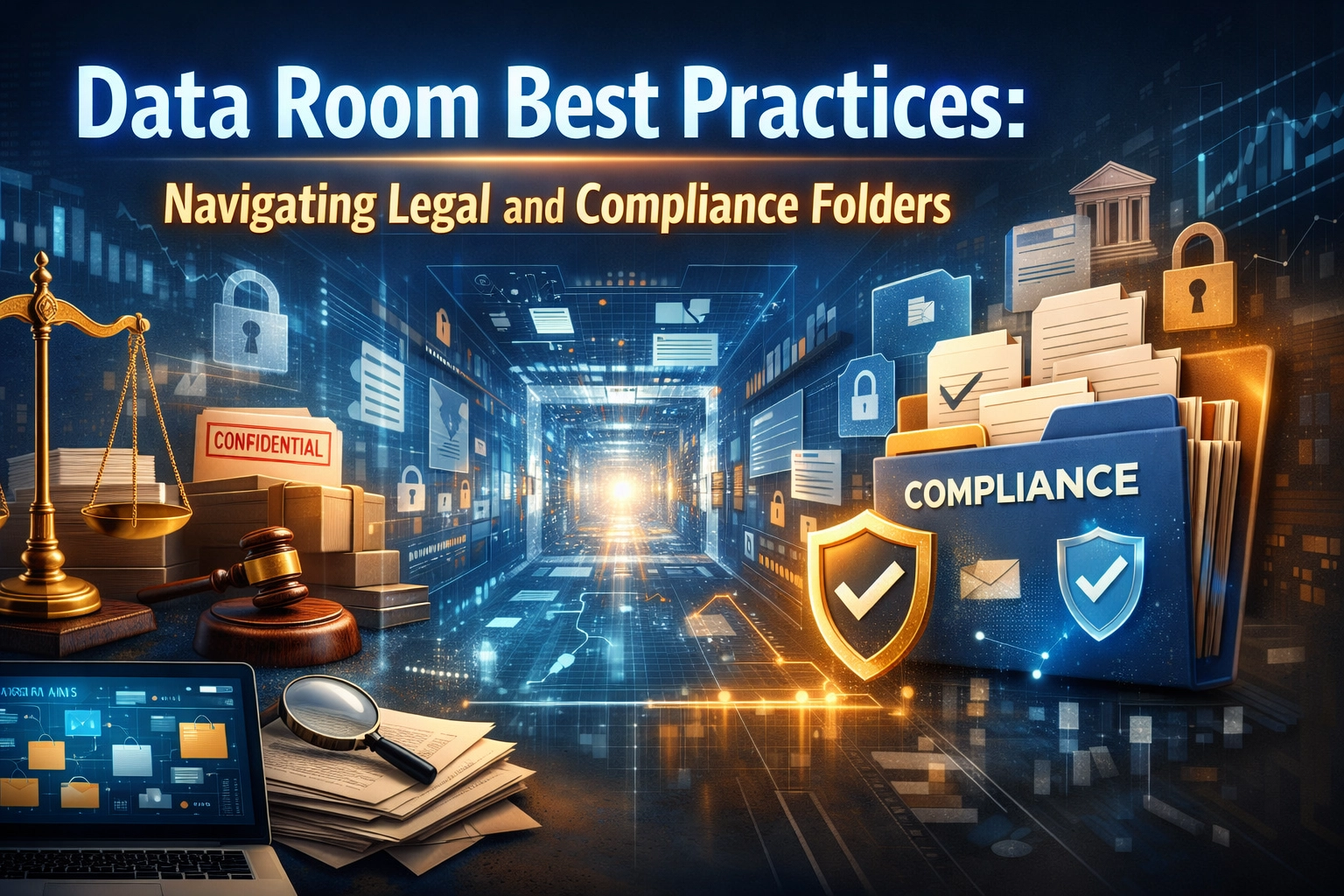
Data Room Best Practices: Navigating Legal and Compliance Folders
Fundraising is often described as a test of vision and grit, but in the final hours of a deal, it becomes a test of meticulous organization. As you move toward a term sheet, the spotlight shifts from your pitch deck to your Virtual Data Room (VDR). Among the various sections, the Legal & Compliance folder is arguably the most critical. It is the "black box" of your company; if it is messy, the deal stalls. If it is empty, the deal dies.
At MOHBILITY, we understand that navigating the complexities of due diligence can feel overwhelming. However, a well-structured legal folder does more than just satisfy a checklist, it actively de-risks the investment for Venture Capitalists (VCs). It proves that your company is built on a stable foundation of integrity, transparency, and strategic foresight.
In this third installment of our Data Room series, we explore how to curate your Legal & Compliance section to ensure a seamless transition from "interested" to "funded."
The Foundation: Entity Formation and Corporate Records
Before a VC invests millions into your vision, they must first verify that the entity they are investing in actually exists and is properly governed. Any ambiguity here creates "clean-up" costs that can lower your valuation or cause investors to flee.
Your Legal folder must begin with a comprehensive corporate history. This includes:
- Certificates of Incorporation: Including all amendments and restatements.
- Bylaws or Operating Agreements: The "rulebook" of your company.
- Minutes from Board and Shareholder Meetings: These provide a narrative of your strategic decision-making process.
- The Cap Table: A clear, up-to-date record of equity ownership, including options, warrants, and convertible notes.
A meticulous record of these documents signals to investors that you operate with a high degree of accountability. If your corporate structure is complex or cross-border, ensuring these documents are translated and notarized is essential for global growth. For those still refining their internal framework, our Ultimate Guide to Business Operational Structure offers a blueprint for building a VC-ready foundation.

Protecting the Moat: Intellectual Property (IP) Filings
In the modern economy, your most valuable assets are often intangible. For technology-driven startups, the IP folder is the primary driver of valuation. VCs are looking for "defensibility", can a competitor easily replicate what you have built?
To prove your proprietary edge, your data room must include:
- Patents and Trademarks: Both granted and pending, across all relevant global jurisdictions.
- Copyrights and Trade Secrets: Documentation of core codebases or unique processes.
- IP Assignment Agreements: This is the most common "red flag." You must prove that every employee, founder, and contractor has legally assigned their work to the company.
- Domain Name Registrations: Proof of ownership for all digital real estate.
If your IP is not properly "locked down," an investor sees a massive liability. They are not just buying your current revenue; they are buying the exclusive right to your future innovation. We frequently assist clients in this area through our Technology Assessment & Strategy Development services, ensuring your tech stack is as legally sound as it is functionally superior.

Revenue and Risk: Material Contracts
The Contracts sub-folder provides a window into your company’s future cash flows and potential exit barriers. VCs will scrutinize these documents for "Change of Control" clauses, which could give partners or vendors the right to terminate a contract if you are acquired.
You should categorize your contracts into three distinct areas:
- Customer Agreements: Focus on your top 10–20 clients or any "anchor" accounts.
- Vendor and Supplier Contracts: Especially those that are critical to your supply chain or cloud infrastructure.
- Leases and Real Estate: Essential for companies with a physical footprint, ensuring long-term operational stability.
When presenting these, transparency is key. Highlighting favorable terms, such as multi-year lock-ins or automatic renewals, can significantly maximize your perceived value. Conversely, hiding a "poison pill" clause in a minor vendor contract can destroy the trust you have spent months building.
Navigating the Regulatory Landscape: Licenses and Permits
As you scale globally, the regulatory maze becomes increasingly dense. Whether you are in Fintech, Healthcare, or Energy, you must demonstrate that you have the legal right to operate.
This section should house:
- Industry-Specific Licenses: Such as banking licenses, medical device clearances, or environmental permits.
- Data Privacy Compliance: In 2026, GDPR, HIPAA, and SOC 2 certifications are no longer "nice to haves", they are mandates. You must show how you handle, store, and protect sensitive data.
- Government Correspondence: Any formal communication with regulatory bodies regarding your business practices.
Investors are increasingly wary of "regulatory arbitrage." By showcasing a robust compliance framework, you position your company as a mature player capable of handling the scrutiny of public markets or large-scale Corporate Partnerships.

Addressing the "Skeleton in the Closet": Litigation History
Many founders fear the Litigation folder, preferring to keep past or pending disputes hidden. This is a strategic mistake. Professional investors understand that as a company grows, legal friction is almost inevitable. What they cannot tolerate is a surprise.
Your litigation folder should include:
- Past Settlements: Documentation showing that previous disputes have been fully resolved and released.
- Pending Actions: A clear summary of the status, potential liability, and your legal counsel’s opinion.
- Threatened Litigation: Any "cease and desist" letters or formal complaints that haven't yet reached a courtroom.
By proactively disclosing these issues, you control the narrative. You transition from a "defensive" posture to a "managed risk" posture. This level of integrity is what separates founders from CEOs in the eyes of a sophisticated investor.

Security Foundations: Protecting the Data Room Itself
It is ironic to house your legal and compliance documents in an insecure environment. The data room itself must be a fortress. According to recent industry standards, effective data room management requires granular permission systems and multi-factor authentication (MFA).
When setting up your Legal & Compliance folder:
- Implement Watermarking: This ensures that if a document is leaked, the source can be identified.
- Use Audit Logs: Monitor who is looking at what, and for how long. If an investor spends three hours in your IP folder but only five minutes in your Financials, you know exactly what they are worried about.
- Enable IP-Based Restrictions: Ensure your data is only accessible from authorized locations, especially when dealing with sensitive Startup Investment Facilitation.
Why This Section De-Risks the Investment
For a VC, "Due Diligence" is essentially a search for reasons to say "no." The Legal & Compliance section is often where those reasons are found. By providing a meticulous, structured, and transparent folder, you remove the friction that slows down deals.
A clean legal folder tells the investor:
- You are Disciplined: You value the "boring" parts of the business as much as the product.
- You are Scale-Ready: Your foundation can support 10x or 100x growth without cracking.
- You are a Trusted Partner: You have nothing to hide, and you value the investor’s time and capital.
At MOHBILITY, we specialize in steering founders through these high-stakes environments. We don't believe in a one-size-fits-all approach; we offer Tailored Management Consulting to ensure your data room is a reflection of your company’s excellence.
Building a data room is a daunting task, but you don't have to do it alone. By focusing on these core legal pillars, you transform a complex administrative burden into a powerful tool for securing your next round of funding.
Are you ready to unlock the full potential of your investment strategy? Contact MOHBILITY today to ensure your legal foundation is built for global success.