


Commodity Trade Facilitation Runs on Data Now, Not Relationships Alone.
Commodity trade has always depended on trust. Experienced traders know which counterparties perform, which routes are reliable, and which local conditions can disrupt a shipment. Those relationships remain valuable.
They are no longer sufficient.
Today, Commodity Trade Facilitation depends on whether you can verify origin, assess risk, connect documentation, monitor changes, and make decisions across multiple jurisdictions. The commercial relationship may open the door. Data determines whether you can move through it with confidence.
For executives managing agricultural products, energy, metals, minerals, or other internationally traded commodities, this shift is strategic. It affects market access, due diligence, financing, insurance, customs interactions, regulatory compliance, and operational resilience.
The challenge is not simply collecting more information. It is creating a trusted, structured, and actionable data environment that enables your business to move commodities while maintaining transparency, accountability, and control.
The problem: relationship-led execution leaves blind spots
A relationship can tell you that a supplier is reputable. It may not tell you:
- Where the commodity was produced
- Whether the product changed hands during transit
- Whether the stated quantity and quality can be verified
- Which regulatory obligations apply to the shipment
- Whether a route, port, counterparty, or jurisdiction has become higher risk
- Whether supporting documents are complete, current, and consistent
- How quickly your team can respond to a regulator, lender, insurer, or buyer
When information is held in emails, spreadsheets, messaging platforms, and individual relationships, your organization may have data without having visibility.
That distinction is critical.
Data visibility means that relevant information can be found. Risk visibility means that information is connected to decisions, controls, and accountability.
A relationship-led model often creates three recurring weaknesses:
-
Concentrated knowledge risk
Key commercial knowledge may sit with a small number of traders or managers. When they are unavailable, the organization loses context. -
Fragmented provenance
Origin, chain of custody, quality certificates, shipping records, and regulatory declarations may exist in separate systems without a consistent identifier. -
Reactive compliance
Teams discover missing information when a shipment is delayed, a counterparty is questioned, or an authority requests evidence.
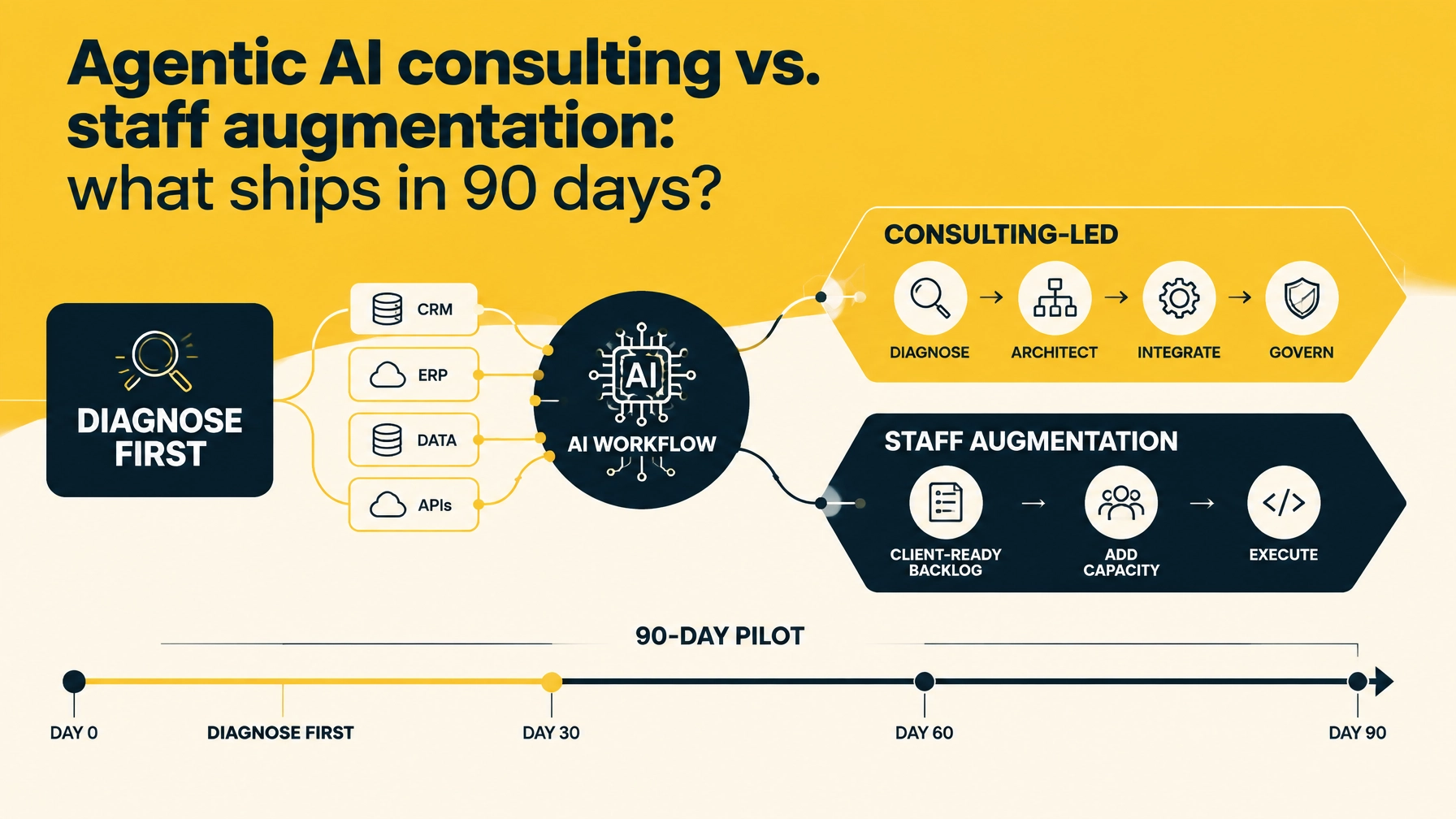
A modern approach to Commodity Trade Facilitation starts by diagnosing these weaknesses before selecting technology.
What modern Commodity Trade Facilitation must make visible
The objective is not to digitize every document indiscriminately. Your objective is to create a reliable evidence chain around every material trade decision.
That chain should connect four dimensions.
1. Provenance
Provenance explains where a commodity originated and how it moved through the supply chain.
Depending on the commodity and jurisdiction, relevant data may include:
- Country and location of production
- Producer, mine, farm, processor, or facility identity
- Geospatial references
- Processing and transformation events
- Warehouse and storage records
- Transport legs and handoffs
- Quality, grade, weight, and inspection records
- Chain-of-custody attestations
- Relevant certifications and due-diligence statements
The OECD’s 2025 report on traceability in critical mineral supply chains identifies origin, path, physical evolution, and chain of custody as core data requirements for meaningful traceability. It also emphasizes that technology alone is not enough. Effective traceability requires technical infrastructure, standardized data, supply-chain collaboration, and governance mechanisms.
That is a useful principle for every commodity category.
2. Counterparty and identity
A supplier record should be more than a name in a contract. It should connect legal identity, beneficial ownership information where appropriate, licensing, operating locations, certifications, performance history, and relevant compliance checks.
This does not eliminate commercial judgment. It strengthens it.
A structured counterparty profile enables you to distinguish between:
- A trusted relationship with verified evidence
- A trusted relationship with incomplete documentation
- A new relationship with strong independent credentials
- A relationship exposed to unresolved regulatory or operational risk
3. Transaction and movement
Trade data must connect the commercial agreement to the physical movement of the commodity and its financial obligations.
Important connections may include:
- Contract terms and pricing basis
- Purchase orders and invoices
- Bills of lading and customs records
- Inspection and assay results
- Inventory positions
- Delivery points and schedules
- Financing and payment milestones
- Hedging or derivative exposures
- Insurance requirements
- Exception events and approvals
Without these connections, your team may understand individual documents but still lack a complete view of the transaction.
4. Risk and control
Risk visibility requires more than a dashboard. It requires defined thresholds, ownership, escalation paths, and a record of decisions.
Your risk framework may need to monitor:
- Sanctions and restricted-party exposure
- Country and jurisdiction risk
- Port, route, and logistics disruption
- Quality and quantity variance
- Fraud and document inconsistency
- Environmental and social due diligence
- Counterparty credit exposure
- Price and basis volatility
- Insurance gaps
- Cybersecurity and data integrity concerns
The strongest systems do not replace human judgment. They direct attention toward the transactions and exceptions that require it.

Regulatory change is accelerating the shift
This movement toward verifiable data is already reflected in documented regulatory developments.
On November 7, 2024, the U.S. Commodity Futures Trading Commission published amendments to Part 40 of its regulations. The final rule became effective on December 9, 2024. Among other changes, the rule requires certain product submissions to include a concise explanation and analysis that is complete with respect to the product’s terms and conditions, the underlying commodity, and compliance with applicable law. It also requires supporting documentation or incorporated information with appropriate citations to data sources.
The practical message is clear: assertions increasingly need an evidentiary foundation.
The CFTC’s rule also emphasizes that commodity characteristics, delivery standards, pricing references, position limits, and risk management considerations must be analyzed in a fact-specific manner. Whether you participate directly in regulated derivatives markets or operate upstream or downstream from them, this direction has wider relevance. Commodity businesses need information architectures that support explainability, documentation, and auditability.
The European Union’s deforestation framework provides another example. The EU Deforestation Regulation links market access for covered commodities and products to due diligence, traceability, and information-system processes. The European Commission’s May 4, 2026 simplification review describes the continued development of an Information System, application programming interfaces, geolocation handling, due-diligence statements, and repositories of relevant legislation and certification schemes.
The lesson is not that every company needs the same compliance architecture. It is that market access increasingly depends on structured, verifiable information.
Technology creates leverage, but only after diagnosis
Technology can improve Commodity Trade Facilitation when it is deployed against a defined operating problem.
Useful capabilities may include:
- Cloud platforms for controlled access across regions and business units
- Application programming interfaces to connect internal systems with external trade or regulatory platforms
- Data governance frameworks to define ownership, quality standards, retention, and access rights
- Digital product passports or provenance records to carry product and chain-of-custody information
- Geospatial tools to validate production locations and route exposure
- Artificial intelligence and machine learning to identify anomalies, prioritize review, and detect patterns
- Workflow automation to route approvals, exceptions, and missing documentation
- Permissioned ledgers or other verification technologies where shared records and audit trails are appropriate
- Cybersecurity controls to protect commercially sensitive and regulated information
However, technology should not be the starting point.
Before investing in a platform, you should diagnose:
- Which decisions are slowed by incomplete information
- Where data is duplicated or contradictory
- Which controls depend on manual intervention
- Which parties own each critical data element
- How exceptions are identified and escalated
- Whether your systems can produce an auditable record
- Which regulatory, commercial, and operational risks matter most
A sophisticated platform built on inconsistent identifiers and weak governance will simply automate confusion.

A practical operating model for data-led facilitation
A tailored operating model typically includes four layers.
Source data
Define the minimum information required from producers, suppliers, agents, carriers, inspectors, banks, insurers, and internal teams.
Standards and interoperability
Create common identifiers, data definitions, document standards, and integration rules. This is where fragmented records become comparable and reusable.
Controls and analytics
Apply validation, due diligence, risk scoring, anomaly detection, and exception workflows. Build controls around the risks that matter, not around the capabilities of a particular software vendor.
Executive decisions
Make the output useful for action. Executives should be able to see which trades are ready to proceed, which require additional evidence, and which should be paused or escalated.
This model supports a more disciplined form of relationship management. Trusted relationships remain central, but the organization no longer depends on memory alone. Evidence, transparency, and accountability become part of the commercial operating model.

Relationships still matter. They just need a stronger system around them.
It would be a mistake to treat data as a substitute for commercial relationships. Relationships provide insight, local knowledge, negotiation leverage, and context that no automated system can fully reproduce.
The better approach is to combine both:
- Use relationships to discover opportunities and understand market realities
- Use data to test assumptions and validate counterparties
- Use technology to connect evidence across borders and systems
- Use governance to protect confidentiality and assign accountability
- Use analytics to surface risks before they become disruptions
- Use human review for material, ambiguous, or high-consequence decisions
That is the difference between digitization and transformation.
The path forward
Commodity Trade Facilitation is becoming a data discipline because the cost of uncertainty is increasing. Regulators expect more complete evidence. Buyers want greater provenance. Lenders and insurers require clearer risk visibility. Internal executives need faster, more defensible decisions.
Your next step should not be to purchase a generic platform or adopt a one-size-fits-all data strategy.
Begin with a structured diagnostic:
- Map the end-to-end commodity transaction
- Identify critical data and evidence gaps
- Assess counterparty, provenance, logistics, and regulatory exposure
- Review system interoperability and cybersecurity controls
- Define the decisions that require better visibility
- Prioritize a tailored roadmap with measurable control points
A trusted advisory partner can help you move from fragmented information to a robust, transparent, and scalable commodity trade operating model. With the right foundation, technology can empower your teams to steer cross-border opportunities, minimize avoidable risk, and facilitate international trade with greater confidence.
Relationships open opportunities. Evidence makes them executable.
For support with global investment facilitation, enterprise advisory, or innovative technology advisory, begin with a focused discussion of your operating environment and risk priorities. Request a tailored proposal.
Sources and further reading
- U.S. Commodity Futures Trading Commission, Provisions Common to Registered Entities, Federal Register, November 7, 2024
- OECD, The Role of Traceability in Critical Mineral Supply Chains, 2025
- European Union, Regulation on deforestation-free products
- UNECE and UN/CEFACT, digital product passports and trade facilitation materials