
15 Questions to Ask Before You Hire a Management Consulting Firm
Hiring a consulting firm can help you address a persistent operational constraint, pursue cross-border opportunities, or move a complex transformation forward. It can also commit your organization to months of work before the real problem, scope, and ownership are clear.
Use these questions to assess how a prospective firm thinks and works, not just how it presents. Strong answers should be specific, transparent, and tailored to your business. A polished proposal is not a substitute for diagnosis.

How will they diagnose your business?
The first test is whether a firm is prepared to understand your operations before recommending a solution. That matters whether you are considering business process optimization, international business consulting, or digital transformation consulting.
1. Will you examine our operations before proposing a solution?
Why it matters: Your stated challenge may be a symptom, not the underlying constraint. A workflow review, stakeholder interviews, and examination of relevant data can reveal where delays, duplication, risk, or missed opportunities actually occur.
Weak answer: “We already know what companies like yours need.”
Strong answer: “We’ll map the relevant process, speak with its owners, and review the available evidence before confirming a recommendation.”
2. What is your initial hypothesis about our problem, and what could change it?
Why it matters: A useful hypothesis gives the team a focused starting point, while a willingness to revise it signals intellectual honesty. You want a partner ready to test assumptions, not defend a preselected solution.
Weak answer: “We’ll figure it out after kickoff.”
Strong answer: “Our initial hypothesis is X, based on what we know so far. Discovery will test it against operational evidence, and we’ll adjust if the facts point elsewhere.”
3. What will the first two weeks look like?
Why it matters: Early activities reveal whether the engagement has a practical path from discovery to decision. Ask what your team will provide, what the consultants will produce, and when you will review findings.
Weak answer: “We’ll schedule a few introductory meetings.”
Strong answer: “We’ll confirm objectives and stakeholders, map the priority workflow, review agreed data, identify key risks, and share an evidence-based problem statement for validation.”

How will they scope and price the work?
A clear scope does not mean every discovery will be predictable. It means you understand what the firm is responsible for, how decisions are made, and what happens when new information changes the work.
4. Is the engagement fixed-scope, open-ended, or phased?
Why it matters: Each model can be appropriate, but the commitments and risks differ. A phased approach can let you make an informed decision after diagnosis rather than committing prematurely to a large implementation.
Weak answer: “We can keep working until the issue is solved.”
Strong answer: “Here are the phases, deliverables, assumptions, review points, and decision gates. You can decide whether to proceed after each phase.”
5. What happens if the scope changes?
Why it matters: New findings can justify a change in priorities, deliverables, or timing. You should know how changes are documented and approved before they affect the engagement.
Weak answer: “We’ll handle changes as they come up.”
Strong answer: “We’ll describe the change, its impact on the plan, and any trade-offs in writing. Your designated decision-maker approves before we proceed.”
6. Who will do the work day to day, and who sold it?
Why it matters: The senior people presenting a proposal may not be the team delivering it. Confirm the delivery lead, relevant experience, time commitment, and escalation route.
Weak answer: “Our full team will support you.”
Strong answer: “Here are the people assigned to the work, their roles, and how often the engagement lead will participate. We’ll notify you and agree on a replacement if the team changes.”
How will they use your data and technology?
Technology should serve a business objective. Before granting access or approving an agentic AI consulting initiative, make sure the firm can explain what information it needs, how it will protect it, and what its technology role actually includes.
7. What data do you need from us, and why?
Why it matters: A precise request helps you assess relevance, availability, sensitivity, and effort. It also discourages broad data collection without a clear purpose.
Weak answer: “Send us everything that might be useful.”
Strong answer: “We need these specific data fields to assess this process and establish a baseline. We’ll identify gaps, permitted uses, and alternatives if access is limited.”
8. How will you manage security, access, and retention?
Why it matters: Consultants may handle commercially sensitive, personal, or regulated information across teams and jurisdictions. Understand access controls, storage, subcontractor access, retention, deletion, and incident procedures.
Weak answer: “Our systems are secure. Don’t worry.”
Strong answer: “We’ll document who needs access, why, where data is processed, how it is protected, and when it will be returned or deleted. We’ll align those arrangements with your requirements.”
For AI-related work, you can also ask how the firm’s risk approach aligns with frameworks such as the NIST AI Risk Management Framework.
9. Are you implementing AI or automation, or only advising on it?
Why it matters: Advice, technical build, integration, and ongoing operations are different responsibilities. Clarify whether the firm will implement tools, recommend vendors, or help your team assess options.
Weak answer: “We’ll bring AI into the business,” with no defined workflow, controls, or delivery boundary.
Strong answer: “We’ll first assess whether automation fits the workflow. If you choose implementation, the proposal will specify the use case, permissions, testing, human review, deliverables, and operating owner.”
For a related perspective, see how to identify a manual work problem before choosing an AI solution.
How will accountability work?
A handover is not the same as a result. Agree early on who owns the outcome, how you will judge progress, and what support remains after recommendations or tools are delivered.
10. What happens in the first 30 days after handover?
Why it matters: Teams need time to adopt new processes, validate assumptions, surface issues, and clarify ownership. Ask who supports that transition and what review points are included.
Weak answer: “We’ll send the final materials and close the project.”
Strong answer: “We’ll confirm operational owners, transfer documentation and access, review adoption and early performance, and agree on issue escalation and next steps.”

11. How will we measure success?
Why it matters: Without a baseline and agreed measures, it is difficult to distinguish meaningful improvement from activity. Measures should reflect the business objective, whether that is reducing cycle time, improving control, or enabling a more reliable investment decision.
Weak answer: “Success means delivering the recommendations.”
Strong answer: “We’ll agree on the baseline, target outcome, data source, owner, and review date. We’ll also record constraints that could affect results.”
12. What happens if the engagement does not deliver?
Why it matters: Not every recommendation will work as expected. A credible firm explains how it will surface problems, revisit assumptions, and agree on corrective action.
Weak answer: “Our approach has a strong track record.”
Strong answer: “We’ll review progress against the agreed measures, explain any shortfall, identify what is within our control, and propose a documented path to correct, revise, or stop the work.”
What governance and ethics should you clarify?
A trusted partner should make its incentives, working arrangements, and intellectual property terms understandable before you sign. This is particularly important when work touches international investments, sensitive data, or strategic decisions.
13. Do you have conflicts of interest?
Why it matters: Existing client relationships, referral fees, or commercial ties to recommended providers may affect advice. You deserve enough information to assess those relationships.
Weak answer: “We work with many companies, but that will not be an issue.”
Strong answer: “We’ll disclose relevant relationships and financial interests, explain how they could affect our work, and agree on safeguards before proceeding.”
14. Will you use subcontractors or other external providers?
Why it matters: Additional parties can affect confidentiality, quality, access, and accountability. Know who may contribute and who remains responsible for the work.
Weak answer: “We may bring in specialists when needed.”
Strong answer: “We’ll identify proposed subcontractors, their roles, and any access they require. We remain accountable for their work and will seek approval where agreed.”
15. Who owns the models, tools, and materials created?
Why it matters: The deliverables may include analysis, software, prompts, configurations, process maps, or evaluation materials. Clear ownership and usage rights help you maintain, adapt, or move the work later.
Weak answer: “We’ll sort out ownership in the contract.”
Strong answer: “We’ll specify what you own, what we retain, what third-party terms apply, and what documentation and access you receive at handover.”
The question most firms fail: who is accountable after the final deck?
A final deck can capture recommendations. It cannot, by itself, ensure adoption, measurable impact, or a clear next decision. Before you sign, ask who remains accountable for turning the work into operating reality, how long that responsibility lasts, and what evidence will show whether the engagement worked.
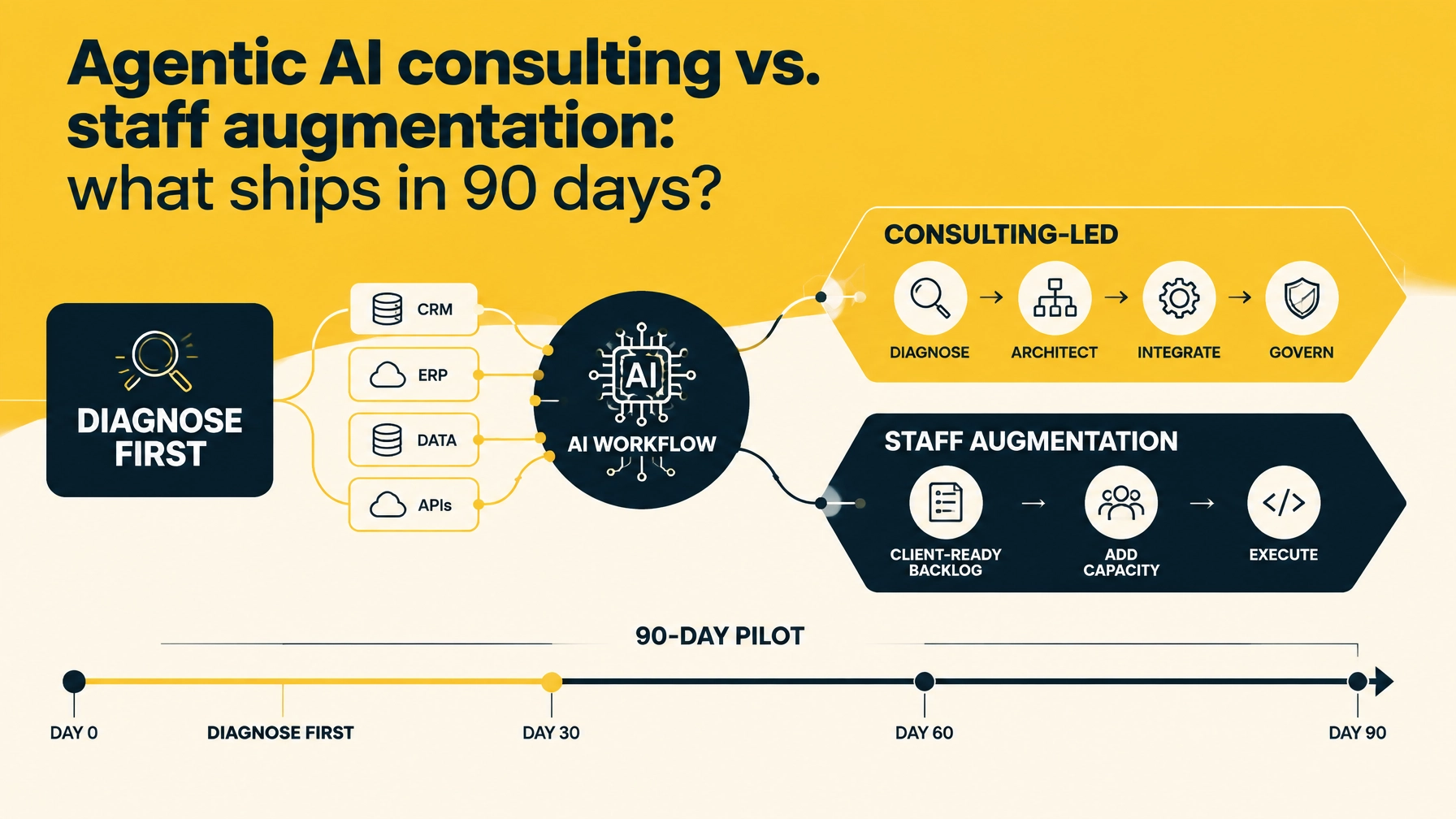
This is the logic behind the MOHBILITY GTM Workbook’s diagnose-first positioning: understand the business constraint before prescribing a solution, then establish clear ownership for what follows. It helps you avoid a one-size-fits-all engagement and focus effort where the evidence supports it.
If you are not yet sure a consulting engagement is the right next step, begin with an AI Opportunity Audit. It is a diagnostic route to assess where AI or automation may fit your operations, prioritize opportunities, and clarify what to do next before committing to broader implementation. Request an initial conversation.
Ask for evidence. Get the responsibilities in writing. Choose a partner prepared to stay accountable beyond the presentation.